Peri News / United States
US court AI policies differ widely, state survey finds
A 50-state survey distinguishes operational restrictions, ethical guidance and rules awaiting commencement for AI use by judges and court personnel.
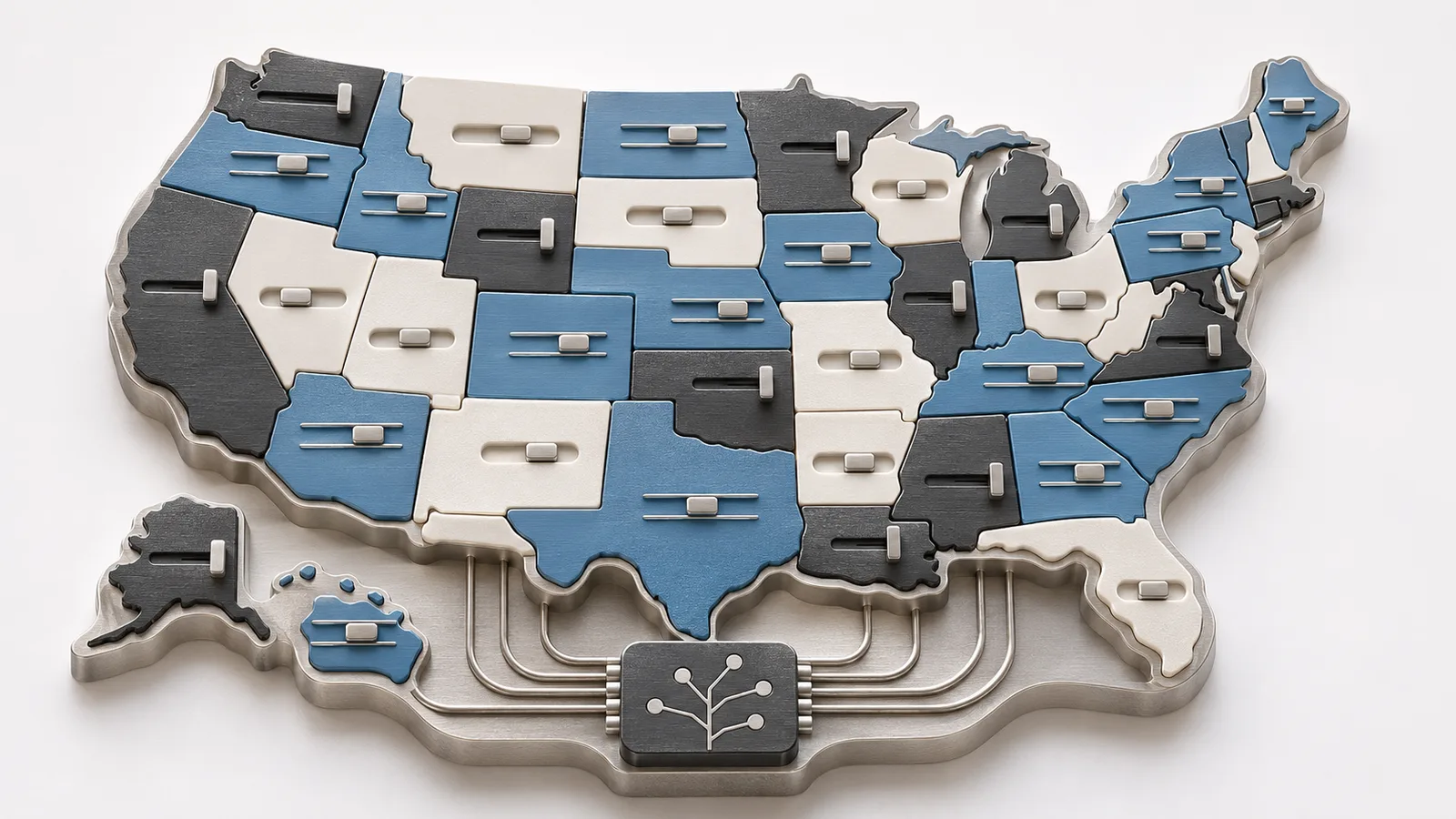
A survey published by Bob Ambrogi on LawSites on November 5, 2026 describes differing approaches to generative AI use by judges and court personnel across all 50 US states. Updated through October 30, the analysis accompanies reporting on Clio’s expansion into the judiciary market, including its acquisition of Learned Hand. It distinguishes operative rules, advisory ethical guidance and administrative principles. Ambrogi says he used ChatGPT for research, Claude to check the results and additional research of his own. Failure to locate a publicly available statewide policy does not establish that none exists.
According to the survey, Massachusetts’ November 2025 interim guidelines prohibit judges, clerks, law clerks and other personnel and contractors from using generative AI for legal research, legal writing and other legal work. Limited administrative uses remain permitted with specified tools, confidentiality safeguards and verification. New York’s policy, effective October 2025, instead permits approved tools subject to training, protection of sensitive information and output checks. A September 2026 ethics opinion also permits approved private systems to summarize transcripts, provided judges verify the summaries and retain decision-making authority. Rhode Island’s guidance is expressly advisory and has no force of law.
The LawSites account also identifies provisions adopted but not yet effective: Iowa’s Chapter 27, approved on July 21, 2026, will take effect on January 1, 2027. It covers judges and adjudicative assistants and provides for source verification, approvals and disclosure requirements for assistants. The common principle identified in the analysis is that AI may assist judicial work without replacing judges’ independent judgment. These descriptions remain based on a journalistic account: the official instruments have not been examined directly, and their scope has not been independently verified.